
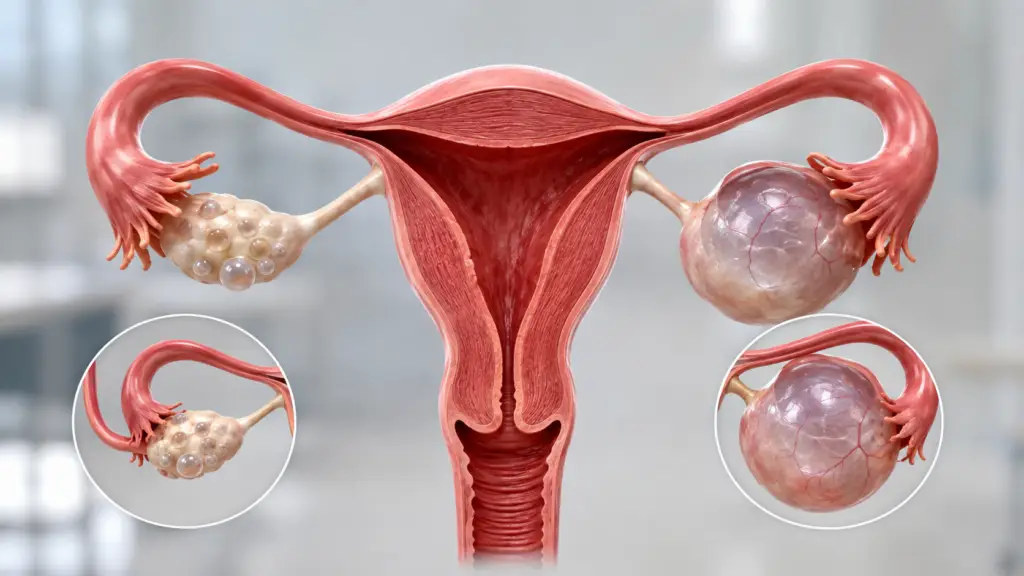
Ovarian cysts are common among women, especially during the reproductive years. In many cases, they are harmless and disappear on their own without any treatment. However, some ovarian cysts can become large, cause significant symptoms, twist the ovary, rupture, or rarely show features that need further evaluation.
Therefore, understanding the different types of ovarian cysts, their symptoms, warning signs, and treatment options can help women seek medical care at the right time.
What Is an Ovarian Cyst?
An ovarian cyst is a fluid-filled sac or pouch that develops in or on an ovary. Ovarian cysts are very common and may occur during the reproductive years as well as after menopause.
Most ovarian cysts are benign, which means they are not cancerous. Many develop as part of the normal menstrual cycle and disappear naturally within a few weeks or months.
However, some cysts may persist, become larger, cause symptoms, or have features that require closer medical evaluation.
What Causes Ovarian Cysts?
There are several possible causes of ovarian cysts. Some are linked to the normal menstrual cycle, while others develop because of underlying conditions.
Common causes and types include:
• Functional cysts related to the menstrual cycle
• Cysts associated with endometriosis, known as endometriomas
• Dermoid cysts or teratomas
• Cystadenomas that develop from cells on the surface of the ovary
• Hormonal changes
• Certain conditions affecting ovulation
Functional cysts are the most common type and usually disappear without treatment.
What Are the Symptoms of Ovarian Cysts?
Many ovarian cysts do not cause any symptoms. They may only be discovered during a routine pelvic examination or an ultrasound performed for another reason.
When symptoms do occur, they may include:
• Pelvic or lower abdominal pain
• A dull or heavy feeling in the lower abdomen
• Bloating or abdominal swelling
• Pain during sexual intercourse
• Irregular, heavier, or lighter periods
• Frequent urination
• Difficulty emptying the bowel
• Feeling full after eating only a small amount
• Difficulty becoming pregnant in some cases
The symptoms often depend on the size, location, and type of cyst.
When Is an Ovarian Cyst Usually Harmless?
Most ovarian cysts are not dangerous. In particular, functional cysts that develop as part of the menstrual cycle often resolve naturally.
If an ultrasound shows a simple-looking cyst and you do not have significant symptoms, your gynecologist may recommend observation rather than immediate treatment.
This approach is commonly called watchful waiting. A repeat ultrasound may be advised after a period of time to check whether the cyst has become smaller or disappeared.
Therefore, finding an ovarian cyst does not automatically mean that surgery is necessary.
When Can an Ovarian Cyst Become Dangerous?
Although most ovarian cysts are harmless, complications can sometimes occur.
An ovarian cyst may become concerning if it:
• Becomes very large
• Causes persistent or severe pain
• Ruptures or bleeds
• Causes the ovary to twist
• Continues to grow or does not disappear
• Has an unusual or concerning appearance on ultrasound
• Develops after menopause and requires further assessment
One important complication is ovarian torsion, where the ovary twists and its blood supply may become reduced or blocked. A large cyst can increase the risk of this complication.
What Are the Warning Signs of a Ruptured or Twisted Cyst?
A ruptured cyst or ovarian torsion can cause sudden symptoms and may require urgent medical attention.
Warning signs may include:
• Sudden and severe pelvic or abdominal pain
• Severe pain mainly on one side
• Nausea or vomiting
• Dizziness or feeling faint
• Increasing abdominal discomfort
• Sudden pain associated with a known ovarian cyst
Sudden severe pelvic pain, especially when accompanied by nausea or vomiting, should not be ignored. Prompt medical assessment is important because ovarian torsion and other urgent conditions can cause similar symptoms.
How Are Ovarian Cysts Diagnosed?
If your doctor suspects an ovarian cyst, the first step is usually a medical history and pelvic examination followed by imaging.
Tests may include:
• Pelvic ultrasound
• Transvaginal ultrasound when appropriate
• Blood tests in selected cases
• CA-125 or other blood tests when there are features that raise concern about ovarian cancer
• Additional imaging or specialist assessment when required
Ultrasound helps the doctor assess the cyst’s size, location, and appearance and whether it is mainly fluid-filled or has solid components.
It is important to remember that an abnormal CA-125 result does not automatically mean ovarian cancer. Other non-cancerous conditions can also affect this blood test.
When Do Ovarian Cysts Need Treatment?
Not every ovarian cyst needs treatment. The decision depends on several factors, including:
• The size of the cyst
• Its appearance on ultrasound
• Whether symptoms are present
• Whether the cyst is growing or persistent
• The woman’s age
• Whether she has gone through menopause
• Whether there are concerns about cancer
For many women, monitoring is enough because the cyst disappears naturally.
However, treatment may be recommended when a cyst is large, persistent, painful, complicated, or has features that require further investigation.
What Is Watchful Waiting for Ovarian Cysts?
Watchful waiting means monitoring the cyst instead of treating it immediately.
Your gynecologist may recommend a follow-up ultrasound after a specific period to see whether the cyst has changed in size or appearance.
This approach is particularly useful for cysts that appear benign and are not causing significant symptoms. Many functional cysts disappear after one or two menstrual cycles.
Therefore, regular follow-up is important even when immediate treatment is not required.
When Is Surgery Recommended for an Ovarian Cyst?
Surgery may be considered if the cyst:
• Is very large
• Causes significant or persistent symptoms
• Does not disappear with observation
• Has a concerning appearance on imaging
• Has complications such as torsion or rupture
• Raises suspicion of ovarian cancer
Whenever possible, doctors aim to choose an approach that protects the woman’s reproductive health and fertility.
What Types of Surgery Are Used?
When surgery is required, the procedure depends on the size and appearance of the cyst and the overall clinical situation.
Laparoscopy:
This is a minimally invasive procedure performed through small abdominal incisions. It is commonly used when the cyst appears benign and can often provide a quicker recovery.
Laparotomy:
This involves a larger abdominal incision and may be recommended when the cyst is very large or there is concern about cancer.
In some cases, the surgeon may remove only the cyst while preserving the ovary. However, if the ovary is severely affected or cancer is suspected, removal of the ovary may sometimes be necessary.
Can Ovarian Cysts Affect Fertility?
Most ovarian cysts do not prevent pregnancy. However, certain conditions associated with ovarian cysts, such as endometriosis, may affect fertility.
When surgery is needed in women who may want to have children, doctors generally try to preserve the ovary and remove only the cyst whenever it is medically appropriate.
If surgery is recommended, discuss your fertility plans with your gynecologist before the procedure so that the treatment approach can take them into account.
Are Ovarian Cysts Cancerous?
Most ovarian cysts are benign and are not cancerous. However, a small number of ovarian masses can be malignant.
The possibility of cancer becomes more important to assess after menopause. Doctors may consider factors such as age, symptoms, ultrasound findings, blood tests, and whether the cyst changes over time.
Having an ovarian cyst does not mean that you have ovarian cancer. However, a cyst with concerning features should always be evaluated by a gynecologist.
Ovarian Cysts After Menopause
Ovarian cysts can also occur after menopause. However, they require careful assessment because the risk of ovarian cancer is somewhat higher after menopause.
Depending on the ultrasound findings and other factors, your doctor may recommend follow-up ultrasound scans, blood tests, or referral to a specialist.
Therefore, women who have gone through menopause should not ignore a newly detected ovarian cyst or persistent pelvic symptoms.
When Should You See a Gynecologist?
You should consult a gynecologist if you experience:
• Persistent pelvic or lower abdominal pain
• Repeated bloating or abdominal swelling
• Changes in your menstrual pattern
• Pain during intercourse
• Frequent urination or bowel pressure
• A feeling of fullness after eating small amounts
• Difficulty becoming pregnant
• Symptoms that continue or become worse
Early evaluation can help identify the cause and determine whether monitoring or treatment is needed.
When Should You Seek Immediate Medical Attention?
Seek urgent medical care if you experience:
• Sudden, severe pelvic or abdominal pain
• Severe pain with nausea or vomiting
• Fainting or significant dizziness
• Severe or rapidly worsening symptoms
• Sudden pain when you already know that you have an ovarian cyst
These symptoms can occur with complications such as ovarian torsion or cyst rupture, although other urgent medical conditions can cause similar symptoms. Prompt assessment is important.
Can Ovarian Cysts Be Prevented?
Most functional ovarian cysts cannot be completely prevented because they are related to the normal menstrual cycle.
However, regular gynecological check-ups and timely evaluation of unusual symptoms can help detect persistent or complicated cysts early.
If you have a history of ovarian cysts, your gynecologist may recommend follow-up based on the type of cyst and your individual health needs.
Do Not Panic About an Ovarian Cyst
Finding an ovarian cyst can understandably cause worry. However, most ovarian cysts are benign and many disappear without treatment.
The key is to understand that the size, appearance, symptoms, age, and changes over time all matter when deciding whether a cyst needs treatment.
With appropriate evaluation and follow-up, your gynecologist can determine whether observation is enough or whether further treatment is needed.
Expert Gynecological Care in Bhubaneswar
If you have been diagnosed with an ovarian cyst or are experiencing pelvic pain, irregular periods, or other gynecological concerns, professional evaluation can help you understand the cause and choose the right treatment.
📍 Dr. Anamika Gynecology Clinic
Clinic 1:
Ankura Hospital near Sisubhavan Bus Stop,
Bapuji Nagar,
Bhubaneswar, Odisha – 751009
Clinic 2:
Multispeciality Clinic, 82,
University Agriculture Farm Road,
Siripur, Soubhagya Nagar,
Baramunda, Bhubaneswar, Odisha – 751003
📞 Phone:
+91 9556649424
📧 Email:
contact@dranamikagynic.com
Book Your Gynecology Consultation Today
Every woman’s symptoms deserve proper attention. Whether an ovarian cyst needs simple observation or active treatment depends on its characteristics and your individual health.
If you have been diagnosed with an ovarian cyst or are experiencing persistent pelvic symptoms, consult Dr. Anamika for personalized gynecological evaluation and guidance.