
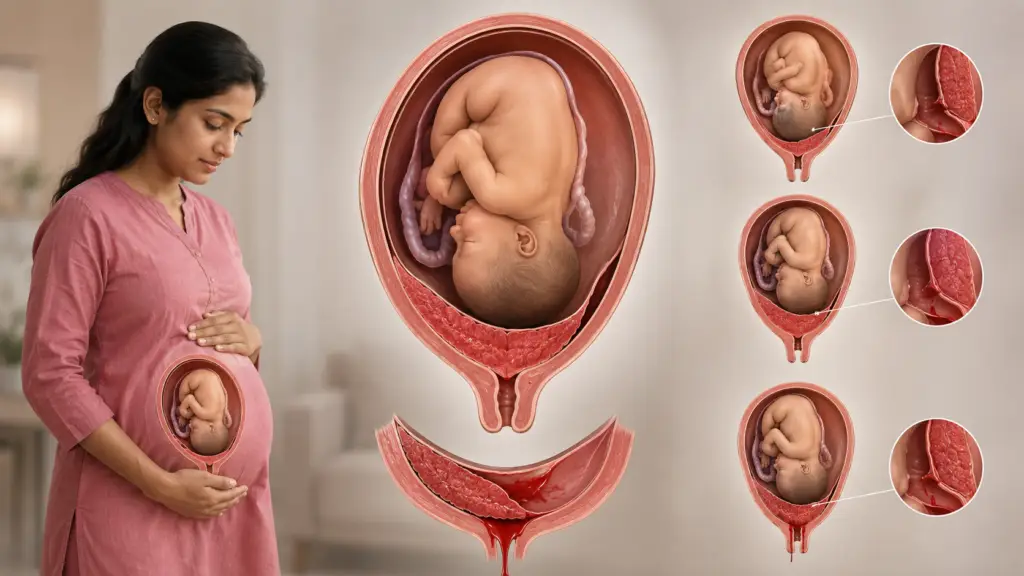
Pregnancy brings many physical changes, and the placenta plays an important role in supporting the growing baby. However, sometimes the placenta attaches lower in the uterus than expected and may partly or completely cover the cervix. This condition is known as placenta previa.
Placenta previa can increase the risk of vaginal bleeding, especially during the later stages of pregnancy. However, with regular monitoring, appropriate precautions, and timely medical care, many women can have a safe pregnancy and delivery.
Understanding the symptoms, risk factors, diagnosis, and treatment options can help you recognize when medical attention is needed.
What Is Placenta Previa?
The placenta is an organ that develops during pregnancy and provides oxygen and nutrients to the baby through the umbilical cord.
Normally, the placenta attaches to the upper part of the uterus. In placenta previa, however, the placenta attaches in the lower part of the uterus and may be close to or cover the cervix, which is the opening between the uterus and vagina.
If the placenta remains close to or covers the cervix later in pregnancy, it can make vaginal delivery unsafe because the placenta may block the baby’s passage through the birth canal.
What Is the Difference Between a Low-Lying Placenta and Placenta Previa?
A placenta that is positioned close to the cervix is often described as a low-lying placenta.
Placenta previa generally refers to a placenta that covers the cervix. The exact terminology and measurements may vary depending on the ultrasound findings and clinical guidelines.
Importantly, the position of the placenta can change as pregnancy progresses. As the uterus grows, the placenta may become farther away from the cervix.
Therefore, being told that you have a low placenta during the middle of pregnancy does not always mean that it will remain low until delivery.
What Causes Placenta Previa?
The exact reason why placenta previa develops is not always known. However, certain factors can increase the likelihood of having a low-lying placenta.
Risk factors may include:
• Previous cesarean delivery
• Previous surgery involving the uterus
• Previous placenta previa
• Multiple pregnancy, such as twins or triplets
• Pregnancy following fertility treatment
• Increasing maternal age
• Smoking during pregnancy
Having one or more risk factors does not mean that placenta previa will definitely occur. It can also develop in women without obvious risk factors.
What Are the Symptoms of Placenta Previa?
The most common symptom of placenta previa is vaginal bleeding during the second half of pregnancy.
The bleeding is often:
• Bright red
• Painless
• Sudden
• Sometimes heavy
• More common during the later months of pregnancy
Some women may have no symptoms at all and discover the condition during a routine ultrasound.
However, any vaginal bleeding during pregnancy should be reported to your healthcare provider because there are several possible causes of bleeding during pregnancy.
Why Is Placenta Previa Dangerous?
Placenta previa can cause significant bleeding because the placenta is located close to the cervix.
As pregnancy progresses and the lower part of the uterus stretches, blood vessels in the area may bleed.
Possible complications include:
• Heavy vaginal bleeding
• Maternal anemia due to blood loss
• Need for hospitalization
• Premature birth
• Need for blood transfusion in severe bleeding
• Emergency delivery
• Increased risk of complications for the baby
Therefore, close monitoring is important when placenta previa is diagnosed.
Can Placenta Previa Affect the Baby?
Placenta previa mainly creates a risk of bleeding for the mother. However, the condition can also affect the baby indirectly.
If significant bleeding occurs, the baby may need to be delivered earlier than expected. Premature birth can increase the risk of health problems related to being born too early.
For this reason, doctors carefully monitor both the mother’s health and the baby’s growth and well-being during pregnancy.
How Is Placenta Previa Diagnosed?
Placenta previa is usually diagnosed through an ultrasound examination.
The position of the placenta is routinely checked during the pregnancy ultrasound, including the mid-pregnancy scan.
If the placenta appears low-lying, your doctor may recommend another ultrasound later in pregnancy to determine whether it has moved farther away from the cervix as the uterus has grown.
A transvaginal ultrasound may also be used when necessary. It provides a clearer view of the cervix and placenta and can be performed safely when medically indicated.
Can Placenta Previa Resolve on Its Own?
Yes. A low-lying placenta detected earlier in pregnancy may no longer be close to the cervix later in pregnancy.
As the uterus expands, the area where the placenta is attached stretches and the placenta may appear to move farther away from the cervix.
Therefore, an early diagnosis does not always mean that placenta previa will continue until delivery.
Follow-up ultrasound is important to determine the final position of the placenta.
How Is Placenta Previa Managed During Pregnancy?
Management depends on the position of the placenta, the amount of bleeding, the stage of pregnancy, and the health of both mother and baby.
Your doctor may recommend:
• Regular antenatal appointments
• Follow-up ultrasound scans
• Monitoring for vaginal bleeding
• Monitoring the baby’s growth and well-being
• Treatment for anemia if required
• Hospital observation if there is significant bleeding
• Medicines or other measures when needed to support the pregnancy if early delivery becomes a concern
If bleeding is heavy or continues, hospitalization may be necessary so that the mother and baby can be monitored closely and emergency treatment can be provided if required.
Do You Need Complete Bed Rest With Placenta Previa?
Not every woman with placenta previa needs complete bed rest.
The level of activity recommended depends on your individual condition, symptoms, bleeding history, and doctor’s advice.
If you have been diagnosed with placenta previa, follow your obstetrician’s instructions regarding physical activity, travel, work, and other daily activities.
Do not start strict bed rest or significantly restrict your activity without medical advice.
Should You Avoid Sexual Intercourse With Placenta Previa?
If you have placenta previa or a low-lying placenta, your doctor may recommend avoiding vaginal intercourse or other activities that could increase the risk of bleeding, particularly if you have already experienced bleeding.
The advice can vary depending on the location of the placenta and your pregnancy history.
Therefore, discuss sexual activity and other precautions with your obstetrician rather than following general advice from others.
Can Placenta Previa Cause Premature Delivery?
Yes. Placenta previa can increase the risk of premature birth, particularly when significant or repeated bleeding occurs.
If there is a high risk that the baby may be born early, your doctor may recommend additional monitoring and, when appropriate, medicines such as corticosteroids to help prepare the baby’s lungs for an early birth.
The exact management depends on the number of weeks of pregnancy, the severity of bleeding, and the condition of the mother and baby.
Can You Have a Normal Delivery With Placenta Previa?
The answer depends mainly on the position of the placenta near the end of pregnancy.
If the placenta remains over or very close to the cervix, vaginal delivery may not be safe. In such cases, a cesarean delivery is generally recommended.
However, if a low-lying placenta moves sufficiently far away from the cervix and there are no other reasons preventing vaginal birth, your doctor may discuss the possibility of vaginal delivery.
Therefore, the final delivery plan is usually based on a later pregnancy assessment rather than an early ultrasound alone.
When Is a Cesarean Delivery Recommended?
If placenta previa continues to cover the cervix later in pregnancy, a cesarean delivery is generally recommended because the placenta can obstruct the baby’s passage through the birth canal and may cause severe bleeding during labor.
Your obstetrician will plan the timing of delivery based on the placenta’s position, your symptoms, previous bleeding episodes, and the health of both mother and baby.
In some situations, delivery may need to happen earlier than planned if significant bleeding or other complications develop.
What Happens If You Have Heavy Bleeding?
Heavy bleeding during pregnancy can be an emergency.
If significant bleeding occurs, doctors may assess:
• The mother’s blood pressure and vital signs
• Amount of blood loss
• Blood count and blood group
• The baby’s heart rate and well-being
• Placenta position and pregnancy status
If bleeding is severe, hospital treatment may include intravenous fluids, blood products, close monitoring, and urgent delivery when necessary.
Therefore, heavy vaginal bleeding during pregnancy should never be managed at home without medical assessment.
When Should You Contact Your Doctor Immediately?
Contact your doctor or maternity care team immediately if you experience vaginal bleeding during pregnancy, particularly if you have been diagnosed with a low-lying placenta or placenta previa.
Seek urgent medical attention if you experience:
• Bright red vaginal bleeding
• Heavy or increasing bleeding
• Dizziness or feeling faint
• Weakness or symptoms suggesting significant blood loss
• Abdominal pain or contractions
• Reduced fetal movements
• Difficulty breathing or feeling seriously unwell
Even if the bleeding is painless or stops on its own, it should still be assessed.
Can Placenta Previa Be Prevented?
Placenta previa cannot always be prevented because the exact cause is not always known.
However, avoiding smoking and receiving appropriate prenatal care are important for overall pregnancy health.
Women with risk factors, such as previous cesarean delivery or uterine surgery, may require careful assessment of placental location during pregnancy.
Most importantly, regular antenatal care helps doctors identify placenta-related problems early and plan appropriate follow-up.
Placenta Previa and Future Pregnancies
Having placenta previa in one pregnancy does not necessarily mean that it will occur again.
However, your previous pregnancy and delivery history are important when planning future pregnancies.
If you have previously had placenta previa, particularly along with previous cesarean deliveries or uterine surgery, inform your obstetrician during your next pregnancy so that appropriate monitoring can be arranged.
Healthy Pregnancy Requires Regular Monitoring
Placenta previa can sound frightening when first diagnosed. However, a low placenta found during pregnancy does not always remain low, and many cases are identified early enough for careful monitoring and planning.
The most important steps are regular antenatal care, attending recommended ultrasound scans, following your doctor’s advice, and reporting any vaginal bleeding promptly.
With appropriate monitoring and a well-planned delivery strategy, doctors can reduce the risks associated with placenta previa and provide safer care for both mother and baby.
Expert Pregnancy Care in Bhubaneswar
If you have been diagnosed with placenta previa, experienced vaginal bleeding during pregnancy, or have concerns about your baby’s growth or placental position, timely evaluation by an experienced gynecologist can help you understand your condition and pregnancy management options.
📍 Dr. Anamika Gynecology Clinic
Clinic 1:
Ankura Hospital near Sisubhavan Bus Stop,
Bapuji Nagar,
Bhubaneswar, Odisha – 751009
Clinic 2:
Multispeciality Clinic, 82,
University Agriculture Farm Road,
Siripur, Soubhagya Nagar,
Baramunda, Bhubaneswar, Odisha – 751003
📞 Phone:
+91 9556649424
📧 Email:
contact@dranamikagynic.com
Book Your Pregnancy Consultation Today
Every pregnancy deserves careful monitoring and timely medical attention. If you have been diagnosed with placenta previa or have experienced vaginal bleeding during pregnancy, do not delay medical evaluation.
Book a consultation with Dr. Anamika for personalized pregnancy care, monitoring, and guidance throughout your pregnancy.